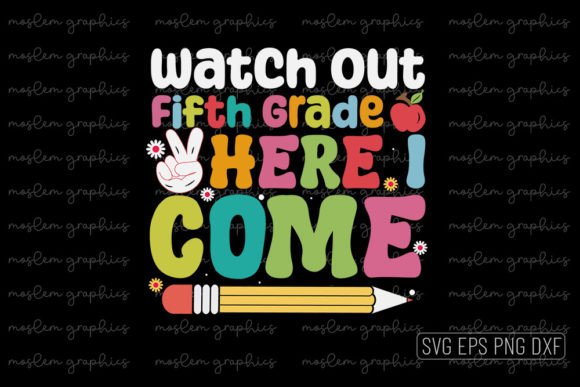
Watch out Fifth Grade Here I Come – SVG: A Practical Guide for Crafters and Educators
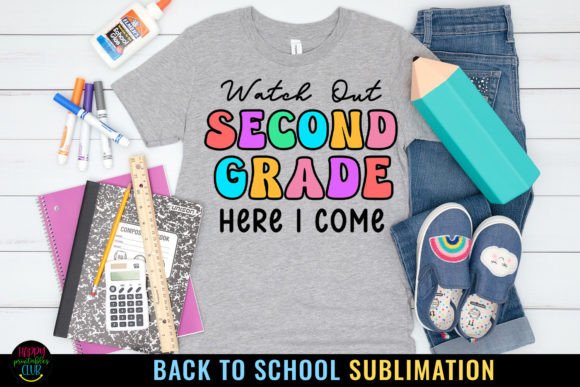
If you’re preparing for the school year—whether as a parent, teacher, or small-batch creator—the Watch out Fifth Grade Here I Come – SVG design offers a lighthearted, customizable way to mark that pivotal academic milestone. Unlike generic back-to-school graphics, this file set is built around a specific, relatable sentiment: the mix of pride, nervous energy, and quiet accomplishment that comes with entering fifth grade. It’s not just decorative—it’s context-aware, making it more resonant for classroom displays, student gifts, or personalized apparel.
What Makes This SVG Design Distinct?
The Watch out Fifth Grade Here I Come – SVG package delivers four core file types—EPS, SVG, PNG, and DXF—each serving different production needs. The SVG file is the centerpiece: fully vector-based, infinitely scalable without quality loss, and compatible with most digital cutting software including Silhouette Studio and Cricut Design Space. Unlike raster-only PNGs (which blur when enlarged), or low-resolution print files, this set maintains clarity whether printed on a 3-inch mug decal or a 24-inch wall banner.
Key technical features support real-world use: layers are organized for easy editing, colors are fully changeable in vector editors like Adobe Illustrator or Inkscape, and transparency is preserved across formats. The 300 dpi resolution ensures crisp output for printed products like tea towels or art prints, while the vector nature means no pixelation during vinyl cutting or embroidery digitizing.
How It Compares to Other Back-to-School SVG Options
Many “back to school” SVG collections prioritize broad appeal—think apples, pencils, or generic “Class of 2025” phrases. While useful, they often lack narrative specificity. The Watch out Fifth Grade Here I Come – SVG stands out by anchoring its message in a developmental transition: fifth grade is widely recognized as the bridge between elementary and middle school, often involving new responsibilities, increased independence, and social shifts. That nuance matters when designing for authenticity—not just decoration.
Compared to hand-drawn or font-based alternatives, this design balances readability and charm. It avoids overly cutesy fonts that limit legibility at smaller sizes (e.g., on iron-on transfers for backpacks) and steers clear of rigid, monoline styles that don’t hold up well in layered vinyl applications. Its balanced letter spacing and moderate stroke weight make it versatile across mediums—from heat-transfer vinyl on cotton jumpers to sublimation printing on polyester mugs.
Strengths and Real-World Fit
This SVG excels where flexibility, scalability, and thematic relevance intersect. For educators creating welcome packets or classroom signage, the editable layers allow quick customization—changing “Fifth Grade” to “Grade 5” or adding a school name without redrawing. Parents ordering custom tees for their child’s first day can adjust colors to match school spirit wear or personal preferences, all within minutes.
Crafters using electronic cutting machines benefit from the included DXF and EPS files. DXF works reliably with laser cutters and CNC routers; EPS remains widely supported in professional print workflows. The PNG version—while not editable as vector—offers immediate drag-and-drop usability for digital scrapbooking or social media announcements, especially when transparency is needed over photos or backgrounds.
Its print-ready nature also reduces common friction points: no need to trace, reformat, or manually adjust bleed margins. The transparent background eliminates white halos around text when applied to dark fabrics or ceramic surfaces—a subtle but meaningful detail for consistent results.
Tradeoffs and Situational Limits
Like any single-purpose design, the Watch out Fifth Grade Here I Come – SVG has natural boundaries. It isn’t designed for younger grades (e.g., “Watch out Kindergarten Here I Come”) or older ones (e.g., middle or high school transitions), nor does it include alternate phrasings or bilingual versions. If your goal is broad seasonal coverage across multiple grade levels, a multi-design bundle may offer better long-term value—even if individual files cost less upfront.
Similarly, while the vector shapes are fully resizable, extreme scaling—such as enlarging tiny script elements to poster size—may require minor manual refinement in a vector editor to preserve balance and proportion. That’s typical of most SVGs and not a flaw, but it’s worth noting for users unfamiliar with vector editing basics.
Another consideration: because this is an instant-download digital product, there’s no physical proofing. Users should verify color profiles and sizing in their preferred software before sending to print or cut—especially when working with third-party services that may interpret RGB/CMYK differently.
When It’s the Right Choice—and When to Look Elsewhere
The Watch out Fifth Grade Here I Come – SVG is ideal if you need a ready-to-use, thematically precise graphic for a near-term project tied specifically to fifth-grade transitions. Examples include:
- A teacher printing matching t-shirts for their incoming class;
- A parent creating a “graduation-style” keepsake pillow for their child’s final elementary year;
- A small business producing limited-run mugs or stickers for local school supply fairs;
- An after-school program designing iron-on transfers for student recognition events.
It’s less suited for users needing scalable templates across multiple grade levels, those requiring extensive branding integration (e.g., full logo suites with icons and taglines), or designers who prefer raw, unstyled vector paths for maximum creative control. In those cases, a custom illustration commission—or a broader educational-themed SVG pack—might align better with long-term goals.
Practical Tips for Best Results
To maximize utility, consider these tested practices:
- Test before cutting: Load the SVG into your cutting software and run a test cut on scrap material—especially if using layered vinyl or intricate weeding.
- Check color mode: For screen printing or professional offset printing, convert to CMYK in your vector editor; for home inkjet or sublimation, RGB is usually sufficient.
- Leverage layer organization: Turn off or rename layers (e.g., “shadow,” “outline,” “fill”) to simplify edits—particularly helpful when adapting for embroidery or engraving.
- Scale thoughtfully: Resize using the bounding box handles—not individual nodes—to maintain proportional integrity across all elements.
Because the files are delivered as a ZIP archive with no licensing restrictions beyond personal or small-business commercial use (always verify the seller’s terms), you retain full control over how and where you apply the design—whether for a one-off gift or a small batch of sale items.
Final Considerations for Informed Decisions
Choosing the right SVG isn’t about finding the “best” file—it’s about matching format, intent, and workflow. The Watch out Fifth Grade Here I Come – SVG delivers focused utility: clean vectors, thoughtful formatting, and thematic resonance. It saves time without sacrificing quality, especially for those already familiar with basic vector tools or cutting machine software.
If your work regularly spans multiple grade levels, subject areas, or visual styles, consider evaluating how this design fits within a broader toolkit—not as a standalone solution, but as one reliable component among many. And remember: even with excellent files, successful execution depends on understanding your output medium, testing early, and adjusting for context. That attention to fit—not just features—is what separates functional resources from truly effective ones.