It’s a Good Day to Teach Tiny Humans Tee: A Strategic Creative Asset for Educators and Print-on-Demand Entrepreneurs
In today’s rapidly evolving creative economy—where authenticity, purpose-driven messaging, and scalable digital assets converge—the It’s a Good Day to Teach Tiny Humans Tee design has emerged not merely as a novelty t-shirt concept, but as a high-leverage, multi-platform creative asset. Designed with intentionality and technical precision, this versatile artwork serves educators, small-batch apparel brands, print-on-demand (POD) sellers, and education-focused marketers alike. Its relevance extends far beyond seasonal gifting—it reflects deeper shifts in how professionals communicate identity, values, and expertise through wearable and tangible media.
A Design Engineered for Impact—and Adaptability
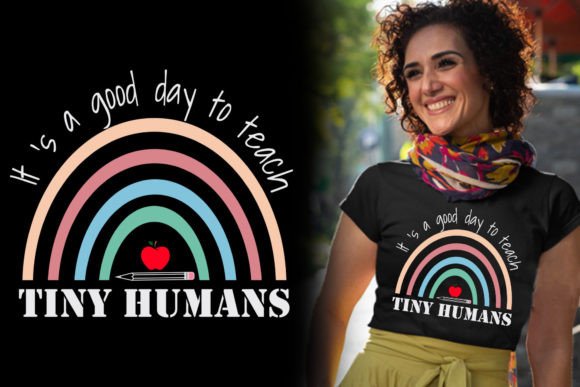
The It’s a Good Day to Teach Tiny Humans Tee is more than a phrase on fabric. It’s a carefully constructed visual system delivered in a production-ready ZIP package—including one AI file, one EPS file, one JPG, and one transparent PNG at 4500×5400 pixels (300 dpi). This isn’t just “printable art.” It’s a modular design infrastructure built for real-world commercial workflows.
Each file format fulfills a distinct operational need: the AI and EPS files support vector-based editing and color customization in Adobe Illustrator or Affinity Designer; the high-resolution PNG ensures crisp reproduction across apparel, mugs, pillows, hoodies, jumpers, and sublimation products; and the JPG offers immediate preview and mockup integration. Unlike low-fidelity clipart or overused stock graphics, this package is engineered for professional output—no upscaling, no pixelation, no licensing ambiguity.
Crucially, the design is easy to modify and change color. That flexibility aligns directly with modern POD best practices: creators can rapidly generate variant SKUs (e.g., navy crewneck, heather grey hoodie, blush ceramic mug), test color palettes against audience preferences, and localize offerings without redesigning from scratch. In an era where speed-to-market and A/B testing drive conversion, that modularity isn’t convenient—it’s competitive.
Why Educators—and Their Supporters—Are Embracing This Message
“It’s a good day to teach tiny humans” resonates because it reframes teaching as joyful, grounded, and deeply human—not bureaucratic, transactional, or burnout-prone. It sidesteps clichéd tropes (“World’s Best Teacher”) and instead affirms daily practice with warmth and quiet confidence. That emotional authenticity is precisely what educators seek in self-expression—and what their communities respond to.
This sentiment arrives at a pivotal moment. Teacher appreciation is no longer confined to a single week in May. It’s embedded year-round in school culture, parent-teacher partnerships, and district wellness initiatives. The It’s a Good Day to Teach Tiny Humans Tee fits seamlessly into multiple high-intent contexts:
- Back-to-School Launches: Paired with retro flower motifs and vintage typography, it taps into the growing “Retro Teacher” aesthetic—a blend of mid-century design sensibility and modern pedagogical pride.
- 100th Day Celebrations: As a milestone marker, it transforms classroom tradition into wearable recognition—ideal for teacher gifts, student-made cards, or staff appreciation bundles.
- Sublimation Product Lines: With its clean lines and balanced negative space, the design performs exceptionally well on ceramic mugs, polyester blankets, and performance sweatshirts—categories seeing double-digit YoY growth in education-themed POD.
Importantly, this isn’t just about teachers wearing the shirt. It’s about signaling shared values: patience, curiosity, resilience, and love of learning. When a principal wears it during open house, or a parent shares a photo of their child holding a matching mug, the design becomes a subtle yet powerful catalyst for community alignment.
Strategic Alignment with Broader Market Shifts
The rise of the It’s a Good Day to Teach Tiny Humans Tee mirrors three converging macro-trends shaping creative commerce:
- The Professionalization of Niche Micro-Brands: Educators are no longer passive consumers—they’re content creators, curriculum designers, and brand builders. Platforms like Teachers Pay Teachers, Instagram, and TikTok have enabled them to monetize expertise and identity. A thoughtfully designed tee isn’t vanity; it’s part of a cohesive personal brand ecosystem that includes lesson plans, newsletters, and merch.
- The Demand for Ethically Sourced, Values-Aligned Products: Buyers increasingly vet purchases through lenses of sustainability, fair labor, and mission fit. When paired with eco-friendly apparel blanks (e.g., organic cotton tees, recycled polyester hoodies), this design supports conscious consumption without compromising visual impact.
- The Acceleration of Hybrid Creative Workflows: Freelancers and small studios now routinely toggle between Canva for quick social mockups, Illustrator for deep edits, and Shopify or Printful for fulfillment. The inclusion of both vector (AI/EPS) and raster (PNG/JPG) files means this design integrates natively across tools—no reformatting delays, no quality loss, no workflow friction.
Consider a freelance graphic designer working with a K–5 charter school. They receive the It’s a Good Day to Teach Tiny Humans Tee ZIP file, adjust the palette to match the school’s brand colors in under five minutes, export variants for t-shirts and tote bags, and deliver print-ready files to the vendor—all before lunch. That efficiency compounds across dozens of clients annually. For entrepreneurs, that same ZIP file becomes the foundation for a scalable Etsy shop or Amazon Merch campaign, with minimal overhead and maximum creative control.
Design as Infrastructure: Beyond the T-Shirt
What makes this offering especially valuable is its intentional cross-category readiness. While many “teacher shirts” are optimized only for screen-printed cotton tees, this design was conceived for multi-surface application: sublimation on polyester, direct-to-garment printing on tri-blends, ceramic mug transfers, pillowcase embroidery digitizing, and even vinyl-cut decals for classroom signage.
The 4500×5400–300 dpi PNG ensures fidelity whether printed at 8 inches wide on a youth tee or scaled to 16 inches across a premium hoodie chest print. And because the background is transparent, designers can composite it onto any surface—light or dark, textured or smooth—without manual clipping or layer masking.
This level of technical preparedness matters. In 2024, platforms like Gelato, Gooten, and Awkward Styles require precise file specifications. Submitting an under-resolved or non-transparent image triggers rejection, delays fulfillment, and erodes customer trust. The It’s a Good Day to Teach Tiny Humans Tee eliminates those risks by default—making it not just aesthetically appropriate, but operationally sound.
Practical Integration Tips for Professionals
For marketers: Use the design in email campaigns tied to Teacher Appreciation Week or Back-to-School planning—pair it with testimonials from educators who’ve used it in classrooms or conferences.
For freelancers: Bundle it with complementary assets—like editable class schedule templates or printable “Teach Love Inspire” wall art—to increase average order value and reinforce your role as a holistic education partner.
For POD entrepreneurs: Run targeted Meta and Pinterest ads highlighting specific use cases—e.g., “100th Day Teaching Shirt for Kindergarten Teachers” or “Retro Flower Back to School Hoodie”—leveraging the exact phrases customers search for.
None of these tactics rely on hype or trend-chasing. They build on the design’s inherent clarity, versatility, and emotional resonance—qualities that compound over time, not fade with the season.
Conclusion: Purpose Meets Precision
The It’s a Good Day to Teach Tiny Humans Tee represents a maturing intersection of design thinking, educator advocacy, and digital commerce infrastructure. It answers real needs: the desire for meaningful self-expression among teachers; the demand for technically robust, commercially viable assets among creators; and the expectation of seamless, scalable execution among entrepreneurs.
It doesn’t ask users to compromise between aesthetics and utility, nostalgia and modernity, or heart and hustle. Instead, it delivers a unified solution—one ZIP file, four formats, infinite applications, zero guesswork. In a landscape crowded with disposable visuals, that kind of focused intention isn’t just refreshing. It’s essential.
Whether you’re launching your first teacher-themed product line, expanding your sublimation catalog, or supporting educators through thoughtful gifting, this design offers more than ink on fabric. It offers infrastructure for impact—ready to print, ready to inspire, and ready to grow with your vision.