Second Grade Dream Team T-shirt SVG PNG
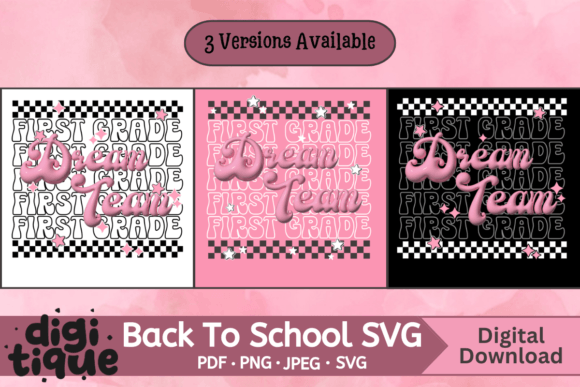
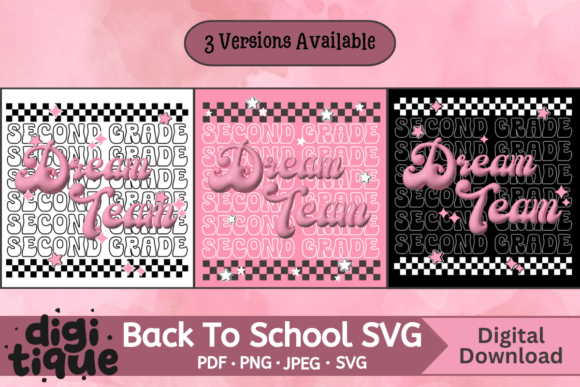
Whether you're a teacher prepping classroom gear, a parent customizing back-to-school tees, or a small-batch apparel seller launching a fun new line, the Second Grade Dream Team T-shirt SVG PNG is more than just clipart—it’s a versatile, classroom-ready digital design built for real-world use. With its retro-funky aesthetic—think shimmering stars, playful sparkles, and crisp checkerboard borders—and bold, layered typography (outlined “Second Grade” + dimensional “Dream Team”), it’s crafted to resonate with kids *and* appeal to adults who value both charm and functionality.
Why This Design Fits More Than Just T-Shirts
This isn’t a one-use graphic. The Second Grade Dream Team digital design comes in multiple formats—SVG, PNG, JPEG, and PDF—so you can scale it cleanly for vinyl cutting, print posters, embroider patches, or even add it to editable Canva lesson plans. Its high-resolution vector foundation (SVG) ensures sharp edges at any size, while the transparent-background PNG makes it ideal for quick mockups or sublimation transfers. Educators use it on bulletin boards and name tags; crafters apply it to tote bags and water bottles; small business owners integrate it into Shopify product listings without redesigning from scratch.
A Common Mistake: Assuming All “Second Grade Dream Team T-shirt SVG PNG” Files Are Equal
Not all digital downloads labeled “Second Grade Dream Team T-shirt SVG PNG” deliver the same quality—or even the same content. Some sellers bundle low-res JPEGs masquerading as SVGs, or include only raster files that pixelate when enlarged. Others omit key elements: no transparent background, missing layers (so you can’t recolor “Dream Team” independently), or no version with outlined text for embroidery compatibility. These oversights cost time, money, and credibility—especially if you’ve already printed 50 shirts only to discover the stars don’t cut cleanly on your Cricut, or the white version doesn’t show up on light-colored fabric.
Another Overlooked Detail: Color Version Limitations
The design offers vibrant pink, classic black, and timeless white—but those aren’t just aesthetic choices. They’re functional. A black version works best on light fabrics and vinyl; pink pops on navy or gray but may need a white underbase on dark shirts; white is essential for heat-transfer vinyl on dark garments. Yet many buyers download only one color and assume it’ll adapt seamlessly across materials. It won’t. Always check whether the file includes *separate, editable color layers*—not just flattened images. If “vibrant pink” is a single merged PNG, you can’t easily swap it to teal for your school’s spirit colors without design software skills.
Format Confusion Leads to Frustration—Here’s How to Avoid It
SVG files are scalable and layer-friendly—but only if they’re truly vector-based and not raster exports saved with an .svg extension. Before downloading, verify that the SVG opens cleanly in Inkscape or Adobe Illustrator with grouped, named layers (e.g., “Stars,” “Checkerboard Border,” “3D Text”). If it opens as a flat image or throws errors, it’s likely a converted PNG. Likewise, PNG files should be delivered at ≥3000px width and include transparency—not a white background masked as “transparent.” One quick test: open the PNG in any free image editor and delete the background. If you see white instead of checkerboard grid, the transparency wasn’t properly exported.
What to Check Before You Buy or Use
- Resolution & scalability: Does the listing specify vector (SVG) *and* high-res raster (PNG ≥3000px)? Avoid files labeled “HD” without dimensions.
- Transparency: Confirm PNGs have true alpha channels—no hidden white backgrounds masking poor export.
- Layer structure: Look for mentions of “editable layers,” “color-separated versions,” or “individual element grouping.” This matters for teachers adapting the design for student name tags or small business owners adding logos.
- Licensing clarity: Is personal *and* small commercial use included? Some “free” downloads restrict resale—even on Etsy-printed items. Read the license before assuming it covers your use case.
- Preview accuracy: Compare the thumbnail preview to actual file screenshots. If the preview shows glitter effects but the downloaded file lacks them, it’s outdated or misrepresented.
Better Approach: Match Format to Your Tool and Goal
If you’re using Cricut Design Space or Silhouette Studio, prioritize the SVG—it imports cleanly, retains layers, and resizes without distortion. For Canva users creating digital handouts or Google Slides, the PNG with transparency saves time and avoids font-rendering issues. Need to add this to a PDF newsletter or printable reward chart? The PDF version ensures consistent fonts and spacing across devices. And if you’re outsourcing printing, send the SVG *and* a 300 DPI PNG side-by-side—the printer can verify alignment and color fidelity.
Real Example: When Skipping Verification Backfires
A homeschool co-op leader bought a “Second Grade Dream Team T-shirt SVG PNG” pack online for $4.99. She assumed the SVG would work for iron-on transfers—only to find the “3D lettering” was a raster shadow baked into the image, not a separate layer. When she tried to resize it for toddler-sized shirts, the effect blurred. She spent two extra hours recreating shadows in Photoshop—time she could’ve saved by checking the file structure first or choosing a vendor that provides layered, well-documented assets.
Final Thought: Quality Starts With Clarity
The right Second Grade Dream Team T-shirt SVG PNG doesn’t just look great—it works reliably across tools, materials, and skill levels. That means clear file labeling, honest previews, and thoughtful formatting—not just trendy visuals. Whether you’re designing for a single classroom or scaling for retail, invest time upfront to verify what you’re getting. It’s the difference between a polished, professional result and a last-minute scramble. And this year, your students—and your sanity—deserve the former.