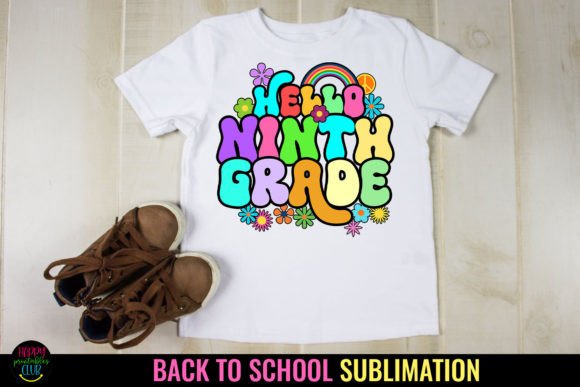
Second Grade First Day School Sublimatio: A Strategic Creative Asset for Educators, Makers, and Small-Business Brands
Second Grade First Day School Sublimatio isn’t just another clipart download—it’s a purpose-built, high-fidelity digital design asset engineered for versatility, emotional resonance, and commercial scalability. At its core, it’s a joyful, classroom-ready sublimation-ready illustration centered on the milestone of a child’s second-grade first day: think cheerful backpacks, oversized pencils, smiling suns, and subtle academic motifs—all rendered in crisp, layered transparency (PNG) at 12×12 inches and 300 DPI. But its value extends far beyond aesthetics. In today’s fast-evolving creative economy—where personalization, speed-to-market, and authentic storytelling drive engagement—this design functions as both a tactical production tool and a cultural signal: one that acknowledges the quiet significance of early learning transitions while empowering creators to meet real-world demand with precision.
A Design That Aligns With Evolving Consumer Expectations
Parents, teachers, and school communities increasingly seek meaningful, non-generic ways to commemorate academic milestones. Generic “Back to School” graphics feel transactional; Second Grade First Day School Sublimatio feels intentional. Its specificity—centering second grade, not kindergarten or middle school—responds to a growing consumer preference for contextual authenticity. Research from education-focused retail trends shows that personalized, grade-specific merchandise (e.g., “My Second Grade Year” tumblers or “Grade 2 Explorer” tote bags) consistently outperforms broad-brush alternatives in conversion and social sharing. Why? Because second grade represents a pivotal developmental inflection point: children begin reading fluently, managing multi-step assignments, and forming deeper peer relationships. Celebrating that moment isn’t nostalgic—it’s affirming.
This shift mirrors broader marketplace behavior. Consumers—especially Gen X and millennial parents—are less likely to buy mass-produced slogans and more likely to invest in items that reflect lived experience. A water bottle featuring Second Grade First Day School Sublimatio isn’t just functional; it signals recognition of a child’s growth. For small-business owners running print-on-demand shops, local craft fairs, or school PTA fundraisers, offering such a design means speaking directly to an emotionally engaged audience—not shouting into the void.
Beyond T-Shirts: How This Asset Fits Modern Production Workflows
The included 12×12 inch, 300 DPI PNG file is optimized for today’s dominant production ecosystems: sublimation printers, direct-to-garment (DTG) workflows, vinyl cutters with print-and-cut capability, and even AI-assisted mockup generators. Its transparent background eliminates time-consuming masking or clipping path work—critical for freelancers juggling tight deadlines or educators producing class materials during summer planning windows. Unlike raster-heavy bundles cluttered with unnecessary layers or low-res variants, this single-file approach reflects a maturing industry standard: lean, interoperable, production-ready assets.
Consider real-world application: A freelance graphic designer building a back-to-school collection for a boutique apparel client can drop the PNG directly into Canva, Adobe Express, or Cricut Design Space—no retouching needed. A homeschool co-op organizer can resize it for printable journal covers or laminated name tags without pixelation. An indie stationery brand launching a “Growth Milestone” notebook line uses the same file across mugs, notebooks, and digital invitations—ensuring visual continuity across touchpoints. That cross-platform consistency isn’t incidental; it’s enabled by deliberate technical choices: resolution fidelity, color-safe CMYK-friendly RGB rendering, and vector-adjacent scalability within raster constraints.
Why Sublimation-Ready Design Is Becoming Non-Negotiable
Sublimation printing has moved from niche industrial process to mainstream creative infrastructure—driven by affordable desktop sublimation printers (like Sawgrass SG1000), heat presses under $300, and expanded substrate availability (ceramic mugs, polyester blends, aluminum blanks). Unlike screen printing or iron-on transfers, sublimation embeds ink into the material, yielding durable, wash-resistant results ideal for high-use items like tumblers and youth apparel. That durability matters: parents expect gear to survive lunchboxes, playgrounds, and backpack zippers.
Second Grade First Day School Sublimatio was built for this reality. Its clean lines, balanced negative space, and mid-contrast palette translate reliably across substrates—even on light-colored polyester tees or matte-finish ceramic mugs. No bleeding. No registration drift. No need for white underbase adjustments (a common pain point with dark garments). That reliability reduces trial-and-error waste, lowers per-unit cost, and accelerates fulfillment—a tangible advantage for micro-businesses operating on razor-thin margins.
Strategic Use Cases Across Professional Contexts
Professionals aren’t just buying designs—they’re solving problems. Here’s how this asset delivers measurable utility:
- Entrepreneurs in Print-on-Demand: Upload the PNG to platforms like Printful or Gelato and instantly generate mockups for Etsy listings tagged with high-intent keywords (“second grade first day shirt,” “back to school sublimation PNG”). Its specificity improves SEO visibility versus generic “school” terms.
- Freelance Designers: Bundle it as a premium add-on for clients launching school-year campaigns—positioning it as a “ready-to-deploy milestone asset” rather than raw clipart. That reframes pricing from commodity to solution.
- Educators & Administrators: Use it in welcome packets, classroom door decorations, or end-of-year reflection journals—reinforcing belonging and continuity without licensing risk.
- Marketing Teams: Integrate it into email headers, social carousels, or parent newsletter banners to humanize institutional communications and increase open rates through relatable visual cues.
Design Ethics, Technical Clarity, and Creator Responsibility
The note in the product description—“I am a designer ONLY. Please be sure you understand how to use the digital files before buying”—isn’t boilerplate. It reflects a necessary evolution in digital creative commerce. As tools democratize, expectations around user proficiency rise. Today’s professional buyer understands that a 300 DPI PNG requires compatible software (Photoshop, Affinity Photo, GIMP) and hardware (a calibrated monitor, a capable printer). They recognize that color variance across devices is inherent—not a flaw—and plan accordingly (e.g., soft-proofing before large batches).
This transparency builds trust. It filters for serious users and sets clear boundaries—freeing designers to focus on what they do best: crafting resonant, technically sound assets—not troubleshooting Photoshop layer masks for novice buyers. It also aligns with industry-wide moves toward ethical digital distribution: no hidden subscriptions, no usage restrictions beyond standard commercial licenses, no forced updates or cloud dependencies. What you get is what you need: one file, one purpose, zero friction.
Looking Ahead: The Role of Intentional Design in Education-Adjacent Markets
As learning becomes increasingly hybrid, personalized, and experiential, the demand for emotionally intelligent design will only grow. “First day” moments are no longer confined to September—they span year-round enrollments, micro-school launches, and international curriculum transitions. Assets like Second Grade First Day School Sublimatio represent a template: grade-specific, technically robust, and culturally aware. They anticipate needs before they’re widely articulated—like offering scalable versions for bilingual classrooms or inclusive representation packs (coming soon in aligned design suites).
For professionals navigating this space, the takeaway isn’t about owning one PNG. It’s about recognizing that every pixel carries intention—and that intention, when aligned with real human milestones and modern production realities, becomes a quiet competitive advantage. Whether you’re launching your first sublimation mug line or designing a district-wide welcome campaign, starting with a design that respects context, craftsmanship, and clarity isn’t just practical. It’s foundational.
So yes—this is a Second Grade First Day School Sublimatio download. But more accurately, it’s a ready-to-deploy node in a larger ecosystem of meaning, efficiency, and growth.