Tired Teachers Club: A Creative Movement Reshaping Back-to-School Culture
“Tired Teachers Club” is more than a witty slogan—it’s a resonant cultural signal, a badge of quiet solidarity among educators, designers, and creative professionals who understand that exhaustion isn’t failure; it’s evidence of deep investment. Far from a cynical meme, the Tired Teachers Club has evolved into a vibrant design movement—fueling a wave of empathetic, high-quality, and commercially versatile back-to-school assets that speak directly to the lived reality of modern teaching.
What Is the Tired Teachers Club—Really?
The Tired Teachers Club began as grassroots teacher humor—a shared sigh in staff rooms and online forums—but quickly matured into something more intentional. It reflects a professional ethos rooted in authenticity: honoring emotional labor, acknowledging systemic pressures (from workload surges to shifting pedagogical expectations), and reclaiming agency through creativity. Today, it’s embodied in thoughtfully crafted visual assets—typography-driven, color-rich, and conceptually grounded—that don’t just say “I’m tired,” but rather, “I show up anyway—and I do it with wit, warmth, and style.”
This ethos powers a growing library of editable design files—including 100 fully customizable AI EPS, SVG, DXF, PNG, and 300 DPI JPG files, all delivered with transparent backgrounds, high-resolution mockups, and step-by-step usage instructions in a single ZIP archive. These aren’t clipart or generic templates. They’re production-ready resources designed for real-world application: screen-printed on hoodies, heat-transferred onto mugs, embroidered on tote bags, or digitally layered into social campaigns.
Why This Resonates Now: The Convergence of Empathy and Enterprise
Three interlocking trends make the Tired Teachers Club not just timely—but strategically relevant for creators, marketers, and small business owners:
- The Rise of Values-Driven Consumerism: Buyers—especially Gen Z and millennial educators, students, and school staff—increasingly choose products aligned with identity, values, and lived experience. A “Tired Teachers Club” tee isn’t ironic detachment; it’s a declaration of belonging. It signals awareness, resilience, and community—not burnout as pathology, but fatigue as shared human texture.
- The Democratization of Professional-Grade Design Tools: With accessible vector editors (like Affinity Designer, Inkscape, and even Canva’s advanced modes), designers no longer need studio contracts to produce polished, scalable assets. The included AI EPS and SVG files leverage this shift—offering full layer control, infinite color adjustment, and seamless integration into print-on-demand workflows. One file becomes hundreds of variations—no coding, no licensing friction.
- The Expansion of Niche Educational Branding: Schools, PTA groups, edtech startups, and teacher-led collectives are investing in branded apparel and merchandise—not as merchandising afterthoughts, but as strategic touchpoints. A “Tired Teachers Club” hoodie worn at a curriculum workshop or district PD day functions as both morale booster and subtle advocacy tool. It says: We see you. We support you. We’re building something better—together.
From Classroom to Commerce: Practical Applications That Scale
Consider how these files operate across real business contexts:
- Educators & Teacher Entrepreneurs: A middle school science teacher launching a side hustle can use the editable PNG and SVG files to create limited-run “Tired Teachers Club” stickers for classroom rewards—or design matching faculty lounge mugs using the included high-res mockups. No designer needed. No stock license concerns. Just brand-aligned, emotionally intelligent assets—ready in minutes.
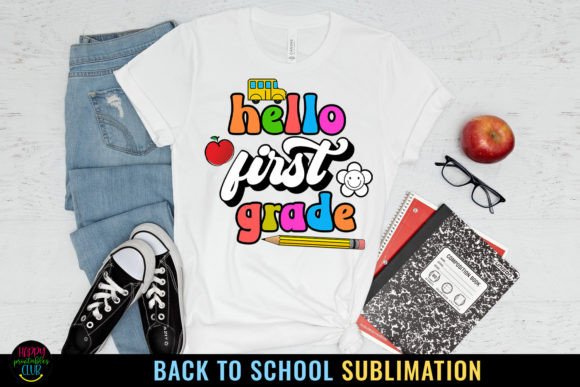
- Print-on-Demand Sellers: With 300 DPI JPGs and transparent-background PNGs, sellers on Etsy, Redbubble, or Printful can upload instantly, preview across dozens of product types (tote bags, pillow covers, enamel pins), and test micro-audiences without inventory risk. The “Quotes Saying TIRED TEACHERS CLUB” variants—paired with clean sans-serif typography or whimsical hand-drawn accents—perform consistently well in search for terms like “funny back to school t-shirt” or “inspirational teacher shirt.”
- School District Communications Teams: Instead of outsourcing annual staff appreciation graphics, marketing coordinators can adapt the vector files to match district colors and fonts—adding logos, dates, or custom slogans while preserving scalability and print fidelity. The result? Cohesive, human-centered internal branding that feels personal—not corporate.
Design Intelligence Meets Emotional Literacy
What separates these assets from trend-chasing novelty is their embedded design intelligence. Each file set balances:
- Typography precision: Legible at 12pt on a mug handle or 120pt on a gym banner;
- Color-system flexibility: CMYK-optimized for screen printing, RGB-ready for digital banners, and pre-separated for vinyl cutting;
- Cultural nuance: Avoiding caricature, sarcasm, or defeatism—opting instead for warmth, dry humor, and quiet dignity.
That’s why “Tired Teachers Club” designs appear alongside “Inspirational Back To School T-shirt”, “Minimalist Back To School T-shirt Design”, and “Creative Fabrica Shirt For Teachers” in curated marketplaces—not as outliers, but as essential nodes in a broader ecosystem of school-themed expression. They coexist with vintage back to school t-shirt motifs and geometric back to school t-shirt design because they serve complementary needs: one evokes nostalgia, another structure—and Tired Teachers Club delivers resonance.
Looking Ahead: Beyond the Slogan
The longevity of Tired Teachers Club lies not in its catchiness—but in its adaptability. As education continues evolving—through AI-assisted lesson planning, hybrid learning models, and renewed focus on educator wellbeing—the visual language around teaching must evolve too. These files aren’t static artifacts; they’re modular components in an expanding vocabulary.
Imagine integrating them into:
- Internal PD slide decks, where a “Tired Teachers Club” icon subtly reinforces self-compassion modules;
- Student-led wellness campaigns, reimagined by art classes using the editable SVG layers as starting points for original illustrations;
- Teacher mentorship programs, where new hires receive a digital toolkit—including the 100 color-changeable files—to co-create welcome materials with authenticity, not stock imagery.
This is where creative infrastructure meets human need. The ZIP file isn’t just deliverables—it’s permission to participate, to personalize, to persist.
Final Thought: Design as a Form of Care
In a landscape saturated with algorithmically generated content and disposable visuals, the Tired Teachers Club collection stands out because it begins with care—not conversion rates or virality metrics. It assumes competence in its users (teachers, designers, entrepreneurs) and trusts them to interpret, adapt, and amplify meaning in context.
When you download and extract the ZIP—when you open the first SVG file and adjust its hue from slate blue to sunflower yellow—you’re not just editing a graphic. You’re engaging in a quiet act of alignment: between professional reality and creative response, between individual experience and collective voice, between being tired—and being seen.
That’s why “Quotes Saying TIRED TEACHERS CLUB” aren’t punchlines. They’re anchors. And why this collection—spanning creative fabrica back to school t-shirt, whimsical back to school t-shirt design, and motivational back to school t-shirt—belongs in every creator’s toolkit: not as decoration, but as dialogue.