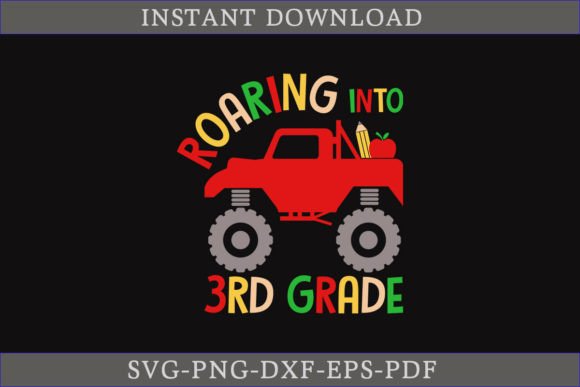
Roaring into 3rd Grade SVG Cut File
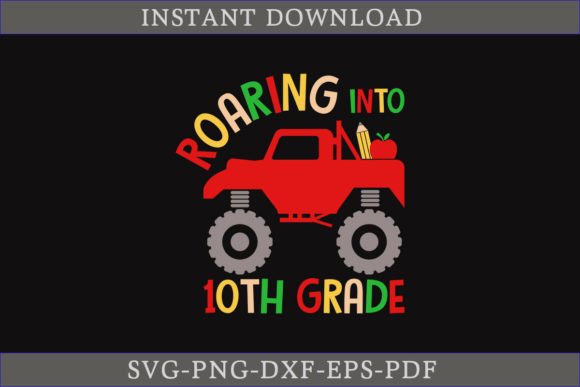
Back-to-school season isn’t just about sharpened pencils and fresh notebooks anymore—it’s about personalization, speed, and creative control. Whether you’re a parent crafting custom classroom welcome signs, a small-batch apparel seller launching a themed merch line, or a teacher designing spirit wear for the first day of third grade, having a polished, production-ready design saves hours of trial and error. That’s where the Roaring into 3rd Grade SVG Cut File stands out—not as generic clip art, but as a purpose-built creative asset engineered for real-world use.
More Than Just a Design—It’s a Workflow Accelerator
This isn’t a static PNG you stretch until it blurs. It’s a fully vector-based cut file delivered in SVG, DXF, EPS, PNG, and PDF formats—all bundled in one easy-to-download ZIP archive. Once unpacked, each file type serves a distinct role: SVG and DXF for Cricut, Silhouette, and other cutting machines; EPS and AI-compatible vectors for professional print prep; high-res PNG for digital mockups or social media; and PDF for quick reference or offline planning. The fact that it’s built from 100 clean, scalable vector shapes means resizing won’t compromise edges, curves, or text clarity—whether you’re scaling it down to fit a 2-inch sticker or up to cover an entire tote bag.
Color customization is intuitive—not buried behind layers of raster effects or locked groupings. With standard vector editing tools (Illustrator, Inkscape, CorelDRAW, or even browser-based editors like Vectr), users can adjust fills, strokes, and gradients in seconds. No need to trace, redraw, or beg a designer for revisions. That flexibility directly supports today’s demand for rapid iteration—especially among educators prepping materials over summer break or Etsy sellers responding to last-minute orders.
Why Third Grade? Why Now?
Third grade marks a pivotal shift in learning: students move from “learning to read” to “reading to learn,” begin more complex problem-solving, and often experience their first real sense of academic identity. Themes like roaring lions, bold typography, and confident color palettes resonate with that energy—and with parents and teachers who want to celebrate growth, not just compliance. Unlike generic “Back to School” graphics, this design speaks specifically to that milestone. It’s intentional, age-appropriate, and emotionally grounded—not just decorative.
That specificity aligns with broader market shifts. Consumers increasingly favor products that reflect individuality and meaning over mass-produced sameness. A t-shirt reading “Roaring into 3rd Grade” carries more narrative weight than “Class of 2028.” For creators, tapping into those micro-moments—grade transitions, school traditions, classroom themes—builds trust and repeat engagement. It’s why educators share these designs on Pinterest with notes like “Perfect for my third-grade door decoration,” and why small business owners report higher conversion on listings tagged with grade-specific keywords.
Designed for Real Machines—and Real People
Cutting machine users know the frustration of downloading a “SVG” file only to find it’s actually a flattened PNG embedded in an SVG wrapper—or worse, riddled with compound paths that won’t separate cleanly on a Silhouette Cameo or Cricut Maker. The Roaring into 3rd Grade SVG Cut File avoids those pitfalls. Every element is outlined, grouped logically, and optimized for clean cuts: no overlapping strokes, no hidden layers, no embedded fonts converted to outlines (so text remains editable without substitution). That attention to technical detail reduces setup time and material waste—critical when you’re cutting vinyl for 25 student name tags before homeroom.
It’s also compatible across platforms. Whether you’re using Cricut Design Space, Silhouette Studio, Sure Cuts A Lot, or Adobe Illustrator for print-ready files, the vector integrity holds. And because it includes EPS 10 support, it integrates smoothly with older versions of professional design software—something many newer SVG packs overlook. That backward compatibility matters for school district graphic designers working on legacy systems or freelance creatives supporting diverse client toolsets.
Practical Uses Beyond the Obvious
Yes, it works beautifully on t-shirts, mugs, and stickers—but its versatility extends further:
- Classroom décor: Cut vinyl for bulletin board letters, laminated desk nameplates, or hallway banners that reinforce grade-level pride.
- Digital learning assets: Drop the PNG into Google Slides or Canva to create engaging welcome videos, interactive quizzes, or virtual classroom backgrounds.
- Fundraising & PTA projects: Print on tote bags or water bottles for school supply drives—customized per grade level without redesigning from scratch each year.
- Small business differentiation: Pair it with coordinating designs (e.g., “Roaring into 4th Grade”) to build a cohesive product line—reducing overhead while increasing perceived brand consistency.
One educator recently used the SVG to cut iron-on transfers for a “Third Grade Leadership Council” sash—then repurposed the same file in black-and-white PNG format for a printable award certificate. That dual-use efficiency reflects how modern creators think: not in single-output silos, but in adaptable asset systems.
Evolving Expectations—And How This Fits In
A decade ago, most DIY crafters relied on free, low-res downloads or paid for one-off designs with restrictive licenses. Today’s users expect transparency, flexibility, and ethical reuse rights—without paying premium prices for basic functionality. They also expect clarity: no vague descriptions like “high quality” or “professional design,” but concrete details about vector fidelity, format coverage, and editing freedom. The Roaring into 3rd Grade SVG Cut File meets those expectations head-on—not by overpromising, but by delivering precise, documented capabilities.
That shift mirrors larger trends in creative software and hardware adoption. As cutting machines become more affordable and intuitive—and as platforms like Canva add vector import features—the barrier to entry for custom design has never been lower. But accessibility alone isn’t enough. What users truly need is *confidence*: confidence that a file will open, scale, cut, and print as expected, with minimal troubleshooting. This design was built with that confidence in mind—tested across devices, verified for layer separation, and structured for immediate usability.
Who Benefits Most—and Why
The obvious audience includes teachers, homeschool parents, and crafters—but its utility reaches further:
- Print-on-demand sellers can integrate it into automated workflows—upload once, generate mockups across dozens of products, and list variations in minutes.
- Marketing coordinators at tutoring centers or after-school programs use it to unify seasonal campaigns (“Roaring into Reading Month”) without commissioning new artwork.
- Freelance designers treat it as a customizable starting point—adding client logos, adjusting color palettes to match school branding, or combining it with complementary icons for full kits.
- Nonprofits and PTAs appreciate the commercial-use license: no royalties, no attribution required, and no limits on quantity—ideal for community-driven initiatives.
What ties these users together isn’t just their tools—it’s their shared need for reliability, speed, and relevance. They don’t want to spend hours reverse-engineering a design they found online. They want to focus on the message, the students, the customers—not the file format.
A Thoughtful Tool for Meaningful Moments
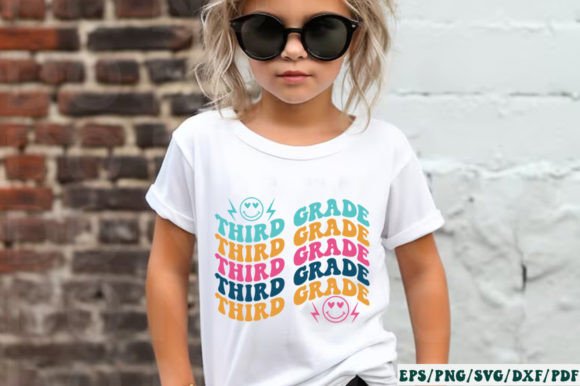
Back-to-school design isn’t about trend-chasing. It’s about marking transitions with intention. When a child wears a shirt that says “Roaring into 3rd Grade,” they’re not just wearing fabric—they’re carrying a quiet affirmation of readiness, growth, and belonging. For the adult creating that item, the right SVG cut file isn’t just convenience—it’s the difference between rushing through a task and investing meaningfully in a milestone.
The Roaring into 3rd Grade SVG Cut File delivers that balance: technically sound, contextually resonant, and practically empowering. It doesn’t try to be everything—but within its focused scope, it does what matters most: helps people create with clarity, confidence, and care.