Made to Teach: A Practical Look at Professional School-Themed T-Shirt Design Resources
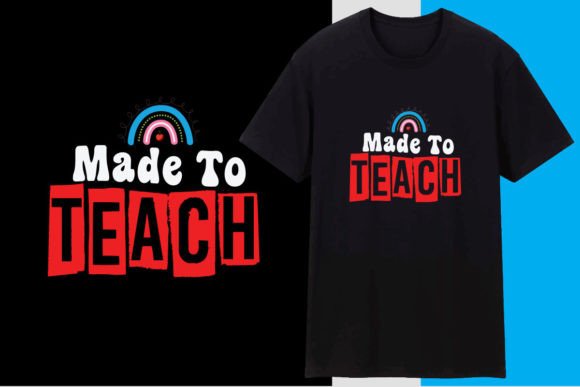
“Made to Teach” is more than a phrase—it’s a design philosophy rooted in clarity, purpose, and classroom authenticity. When educators, school staff, PTA organizers, or small apparel businesses seek t-shirt graphics that reflect pride in teaching, learning, or school community, Made to Teach serves as both a thematic anchor and a functional starting point. Unlike generic clipart or overly stylized illustrations, this design set focuses on recognisable, respectful, and versatile visual language—heart motifs, clean typography, back-to-school cues, and subtle academic symbolism—all crafted for real-world application.
What Makes This Design Set Distinct?
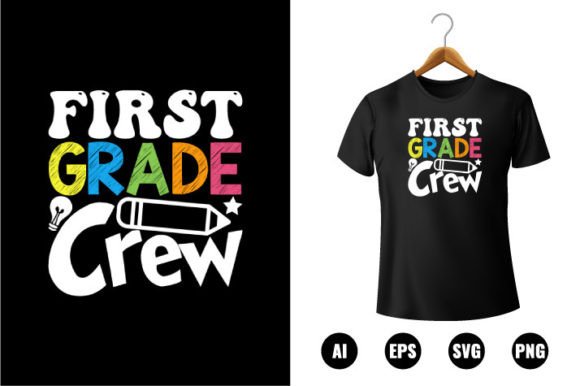
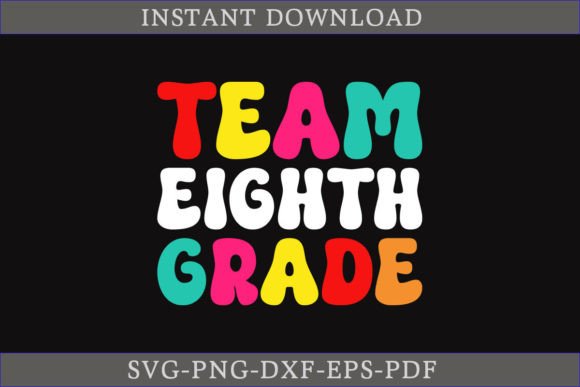
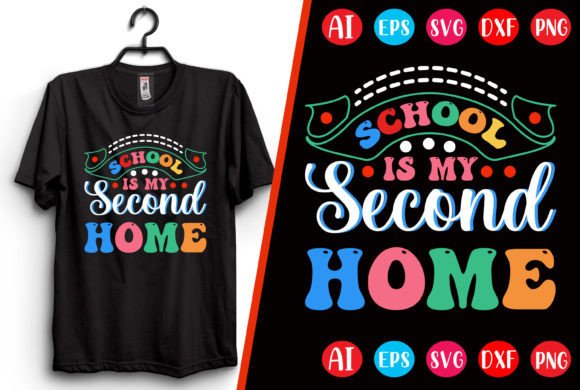
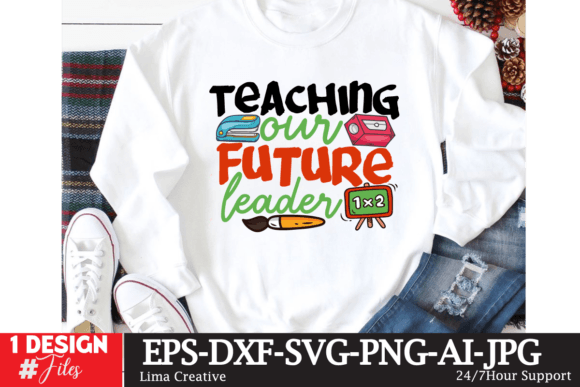
The Made to Teach collection stands out not because it’s flashy, but because it’s built for consistency and adaptability. Each design is delivered as a fully editable vector package—including EPS (version 10), AI, SVG, high-resolution PNG (4500 × 5400 px), JPG mockups, and transparent PNGs—all compressed into a single ZIP file. That means no guesswork about compatibility: designers can open files in Adobe Illustrator, CorelDRAW, Affinity Designer, or even modern web-based editors that support SVG.
Crucially, every element is constructed using 100% vector shapes—not raster traces or flattened layers. That ensures crisp scaling from pocket-sized embroidery to full-front chest prints, without pixelation or loss of fidelity. All text elements—including “Made To Teach”, “Thank You”, “Back_TO_School”, “Craft Tshirt Design”, “School Heart”, “My_School”, and “High_Quality_Design”—are live, editable type, not outlines. You can change fonts, spacing, colour, or hierarchy without degrading quality.
At 300 DPI and with transparent background options included, the assets meet standard print-ready requirements for screen printing, DTG (direct-to-garment), heat transfer, and sublimation workflows. The inclusion of both layered AI files and flattened PNG/JPG variants supports different production pipelines—whether you’re sending artwork directly to a local printer or preparing files for an online fulfilment service like Printful or Gelato.
How It Compares With Other Design Options
Many users begin their search with free resources: public domain icons, Canva templates, or marketplace downloads priced under $5. While those can work for one-off projects or internal use, they often lack vector integrity, have inconsistent line weights, or embed non-editable text. Some require attribution, restrict commercial use, or offer only low-res PNGs—making them unsuitable for professional apparel output.
In contrast, the Made to Teach set prioritises technical readiness over convenience alone. It doesn’t rely on stock photo aesthetics or trendy filters; instead, it uses balanced negative space, intentional kerning, and scalable geometry. That makes it more comparable to mid-tier design libraries used by school merchandisers or boutique apparel studios—except without subscription fees or usage caps.
Compared to custom illustration commissions, this set trades bespoke personalisation for speed and predictability. A freelance designer might charge $150–$400 for a similar concept, with multiple rounds of revision and delivery timelines of 5–10 business days. Here, you receive production-ready files instantly, with full control to adjust colours, layout, or sizing yourself—ideal when deadlines are tight or budgets constrained.
Where This Approach Excels—and Where It Has Limits
This resource shines in scenarios where consistency, clarity, and ease of adaptation matter most. Think: district-wide staff appreciation shirts, PTA fundraiser bundles, teacher welcome kits, or student-led club merchandise. Because all elements are vector-based and colour-swappable, you can quickly generate variations—e.g., navy shirts with gold text, light grey tees with maroon hearts, or black hoodies with white outlines—without reworking the core asset.
It also works well alongside basic design tools. Even if you’re not an Illustrator expert, opening the SVG in Figma or Inkscape lets you recolour shapes with a few clicks. The transparent PNGs allow drag-and-drop placement onto mockup templates, speeding up client previews or social media visuals.
That said, it isn’t designed for maximal creative flexibility. If your goal is photorealistic textures, hand-drawn brush effects, animated versions, or multilingual adaptations (e.g., Spanish or bilingual layouts), you’ll likely need supplemental editing or custom development. Similarly, while the set includes heart, school, and craft motifs, it doesn’t cover niche themes like STEM-specific symbols, special education icons, or regional school mascots—those would require additional illustration work.
Practical Use Cases and Real-World Fit
A middle school science department ordered 60 t-shirts for a “Science Olympiad Week”. Using the Made to Teach “Back_TO_School” vector, they replaced the default font with a bold sans-serif, swapped the heart icon for a subtle atom graphic (added separately), and adjusted spacing for better fit on youth sizes. Total time spent editing: under 20 minutes.
A university education faculty used the “Thank You” + “My_School” combination for faculty appreciation day. They layered the text over a campus skyline PNG (not included, but easy to add), kept the original red-and-white palette, and exported print-ready PDFs for their vendor—all without outsourcing design work.
For smaller operations—like a homeschool co-op selling limited-run tees—the transparency and resolution of the PNG files meant they could upload directly to platforms like Teespring or Redbubble without prepress delays. No need for third-party file conversion services or costly prep fees.
Decision Factors: When to Choose This—And When to Look Elsewhere
Consider this set if:
- You need reliable, print-ready files today, not next week;
- Your team has basic vector editing skills—or access to someone who does;
- You value consistent visual tone across multiple shirt styles or years;
- You’re producing for educators, students, or school-affiliated groups, not broad retail;
- You prefer owning the files outright, rather than licensing them per use.
Look elsewhere if:
- You require photorealistic or illustrated scenes (e.g., teachers in diverse classrooms, detailed school buildings);
- Your brand guidelines mandate highly custom typography or proprietary icon systems;
- You need multi-format deliverables beyond print—such as animated social media banners or app UI assets;
- You’re building a long-term brand identity system and need style guides, usage rules, or extended colour palettes.
Final Thoughts on Fit and Functionality
Made to Teach doesn’t try to be everything. It’s focused: a thoughtfully assembled toolkit for one well-defined need—creating dignified, adaptable, school-centred apparel graphics. Its strength lies in what it leaves out as much as what it includes: no bloat, no locked layers, no ambiguous licensing. Just clean vectors, clear naming conventions, and formats that align with common production workflows.
For educators managing tight schedules, volunteers coordinating school events, or small businesses supporting local schools, that kind of reliability matters. It reduces friction between idea and execution—letting the message (“Made to Teach”) land clearly, without distraction.
If your priority is balancing quality, control, and practicality—not novelty or exclusivity—this set delivers exactly what its name promises: design made to serve teaching, not just decorate it.